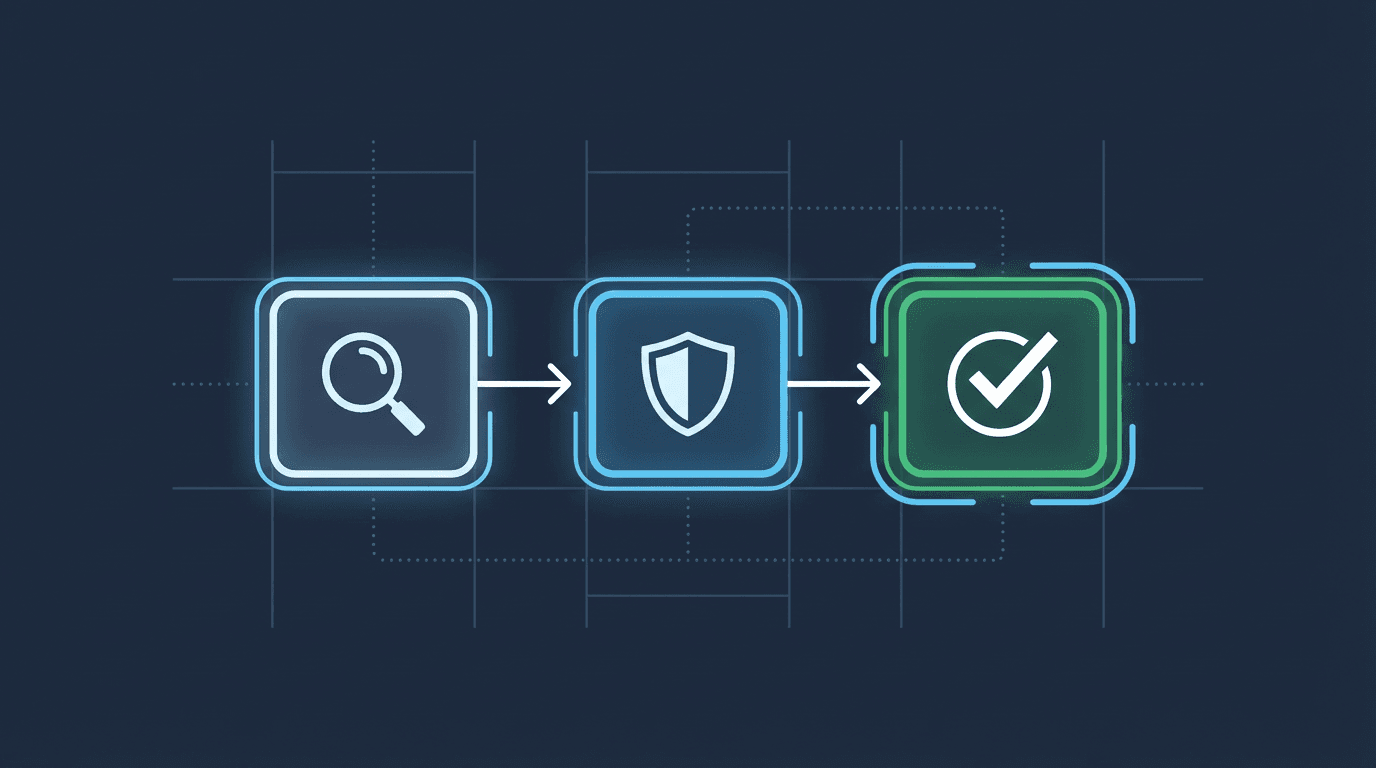
Ad-hoc reviews do not fail loudly—they fail quietly, in duplicated threads, missing NDAs, and "we approved this in Slack last year" moments. A lightweight vendor security review process gives you speed and defensibility without turning every purchase into a waterfall project.
Intake and tiering
Start with a short internal form: what data classes are involved, which systems integrate, and whether the vendor is customer-facing. Assign a risk tier (high/medium/low) up front. Tier drives depth, not bureaucracy for its own sake.
Trust center first look
Before custom questionnaires, assign someone to capture what is already public: certifications, subprocessors, policies. Use TrustLists to find the trust center if the URL is non-obvious. Attach screenshots or PDFs to your ticket for auditability.
Standard questionnaire, trimmed
Send only the control areas the trust center did not cover. If your GRC tool supports it, pre-fill answers from the portal and ask the vendor to confirm. You will get faster responses and fewer copy-paste errors.
Evidence and storage
Define where SOC 2 PDFs, architecture diagrams, and completed questionnaires live. Version them. If legal needs an NDA before release, template that step so it is not a one-off fire drill per vendor.
Decision and conditions
Record approve, approve with conditions (e.g., additional monitoring), or reject—with owners and dates for remediation. Conditions should be trackable, not vague follow up later notes.
Re-review triggers
Set policy for when a vendor returns to the queue: material product change, new subprocessors, incident, or renewal at a certain tier. Without triggers, reviews go stale silently.
Metrics that matter
Track time-to-first-response, time-to-decision, and percentage of reviews that close without executive escalation. If every vendor hits legal, your tiers are wrong—or your templates are too heavy.
TrustLists is a discovery layer for public trust centers. Your process still owns contracts, architecture review, and ongoing monitoring.